Electric mobility is advancing in leaps and bounds, driven by technological innovation and the need to reduce harmful emissions in cities. New solutions are emerging every year that improve the efficiency, range, and accessibility of electric vehicles.
This article explores some of the latest technological trends in this field and how they contribute to more sustainable and efficient mobility.
The trend in batteries: more autonomy and less charging time
One of the key challenges in electric mobility is improving battery technology. Currently, technologies are being developed that promise to significantly increase vehicle range and reduce charging times.
Solid-state batteries, for example, are attracting attention in the industry due to their higher energy density and greater safety compared to conventional lithium-ion batteries. These batteries will not only enable longer distances on a single charge but will also be more durable and sustainable.
Meanwhile, significant research is also being carried out on sodium-ion batteries. This type of battery uses more abundant and cost-effective materials than lithium, which could lower manufacturing costs and minimise its environmental impact.
Another promising line of research is the incorporation of more sustainable materials in battery production, such as graphene-based compounds. This material exhibits exceptional conductivity and a high charge capacity, which could lead to more efficient and lightweight batteries.
In addition, advanced recycling systems are being explored to enable the reuse of critical battery components in new devices, thereby contributing to a more environmentally friendly circular economy.
Ultra-fast charging and wireless charging
The development of ultra-fast charging stations is another key innovation in electric mobility. Thanks to new technologies, some vehicles can regain up to 80% of their battery charge in under 20 minutes. These improvements make long journeys easier and eliminate one of the main barriers to electric vehicle adoption: range anxiety.
Additionally, wireless charging is beginning to establish itself as a viable alternative for the future. This technology enables charging without any cables, as it simply requires the vehicle to be parked over a charging platform. In some countries, electrified roads are already being tested, allowing for charging while in motion, which could represent a true revolution in the sector.
New management systems to enhance battery efficiency
Advances in smart battery management are optimising their use and extending their lifespan. Advanced control systems automatically adjust energy distribution to prevent overheating and premature wear. Furthermore, the implementation of machine learning algorithms allows for more accurate predictions of battery performance, facilitating more efficient charging planning.
Modular batteries are also being developed, allowing for the replacement of only the damaged modules instead of the entire battery, thereby reducing maintenance costs while improving the sustainability of the system.
The importance of an accessible charging infrastructure
For electric mobility to continue growing, it is essential to have a wide, accessible, and efficient charging network that facilitates the transition to sustainable mobility.
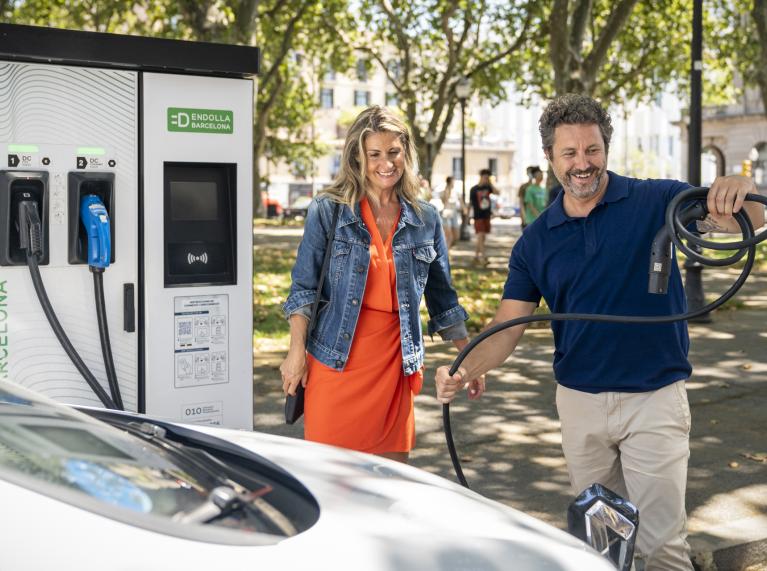
In Barcelona, the Endolla Barcelona charging network enables users to charge their electric vehicles quickly and easily, with an infrastructure that is continually growing. Thanks to Endolla, drivers can drive around the city knowing they have multiple options to recharge their batteries, thereby contributing to a cleaner and more sustainable Barcelona.